


Treadmill Buying Guide
The UAE Treadmill Buying Guide
Updated August 2026

Buying a treadmill is a real investment, and the right machine makes the difference between one you use every day and one that gathers dust. This guide exists so you choose well the first time.
It was written and is personally maintained by Tim Garrett, founder of Gym Fit Out Dubai, drawing on more than 27 years in the fitness industry, including work with 70 of the Fortune 100 companies, professional teams, five star hotels and hundreds of home gyms across the UAE.
If you would rather skip the reading and just see what we recommend, you can browse our current range here: Home Treadmills and Commercial Treadmills. Or contact us and tell us your budget, space and goals, and we will shortlist for you.
Start With Three Questions
Before looking at any specifications, get clear on three things. What is your budget? How much space do you have? And who will actually use it, and how hard?
A retired walker, a family with mixed fitness levels and a serious runner logging 50 km a week need very different machines. Most treadmill regret comes from answering these three questions after the purchase instead of before it.
Budget: What AED Buys You in 2026

Under AED 1,500. We do not recommend buying new at this level. Machines here are built with light frames and small motors and rarely survive regular use. If this is your budget, a quality used machine from a trusted brand such as Sole, NordicTrack or ProForm, less than five years old, is a far better buy than anything new.
AED 1,500 to 3,500. Solid territory for walkers and light joggers. Expect motors around 2.0 CHP, inclines up to 10 percent and fair cushioning. Keep sessions moderate and these machines serve well for years. They are not built for regular running.
AED 3,500 to 7,000. This is where proper home running machines begin. Motors of 3.0 CHP and up, longer decks, better cushioning, real warranties and connected training apps. For most households that run several times a week, this range is the sweet spot.
AED 7,000 to 15,000. Near commercial build quality for serious runners and heavy family use. Stronger frames, 3.5 to 4.0 CHP motors, larger running surfaces and premium consoles. If you are tall, run high volume or simply want a machine that feels planted at speed, look here.
AED 15,000 and above. Full commercial machines of the kind you find in hotel gyms and health clubs. Built for hours of daily use. This is what we install in commercial fit outs, and what some clients choose for home simply because they want the best.
You can filter our range by budget here: Home Treadmills.
Space: Measure Before You Shortlist

Good treadmills are large and heavy. Commercial grade machines can reach 200 kg, and that weight is part of why they feel stable when you run. Take a measuring tape to the space you have in mind and check length, width and ceiling height, and leave clear room to step off the back of the deck safely.
If space is tight, quality folding treadmills with hydraulic assisted decks lift and lower easily and store more compactly. If you have a dedicated gym room, a non folding machine will generally give you a stronger frame for the money.
Match the Machine to the User

Walkers and low impact users are well served in the AED 1,500 to 3,500 range. High incline is optional and can be a hazard for anyone unsteady on their feet.
Mixed family use should start at 3.0 CHP and a 60 inch deck, so the machine keeps up with the most demanding user in the house, not the average one.
Returning from injury, prioritise cushioning quality above all else. Machines from AED 3,500 up with patented cushioning systems are noticeably kinder to joints.
Regular and high volume runners should look from AED 5,000 upward. Anything less will slow down under you and wear out early.
Height and weight matter too. If you are over six feet tall, insist on a belt at least 60 inches, around 152 cm, long, or you will be limited to walking. Check the stated maximum user weight and choose a machine rated comfortably above the heaviest user, not at their weight.
Motors: The One Specification That Predicts Lifespan
You will see two ratings. HP measures peak output for a moment. CHP, continuous horsepower, measures what the motor sustains over a full workout. Always judge a treadmill by its CHP figure. If a machine only advertises HP, treat the number with suspicion.
As a simple rule: 2.0 CHP suits walking and light jogging, 3.0 CHP suits regular running, 3.5 to 4.0 CHP suits serious runners, and 5.0 CHP is commercial territory for all day use.
Speed, Incline, Cushioning, Belt and Frame

Speed. Most quality treadmills top out at 16 to 20 kph, which is more than almost every home user will ever need. Do not pay extra for top speed you will not use.
Incline. A 0 to 15 percent range covers nearly everyone and burns calories significantly faster than flat walking. Decline functions generally appear on machines above AED 6,000. A word of caution: if you train at inclines above 10 percent, make sure the belt is at least 60 inches long.
Cushioning. This is where cheap machines quietly punish your knees. Patented, adjustable cushioning systems from brands like NordicTrack and Life Fitness let you tune the deck from soft to road like.
Belt size. 20 x 55 inches suits walkers. 20 x 60 inches is the standard for quality machines. 22 x 60 inches is ideal for runners and taller users.
Frame. The best machines carry lifetime frame warranties. Crossbars, overall weight and a wide base all contribute to a machine that feels stable rather than shaky at speed.
Technology Worth Paying For
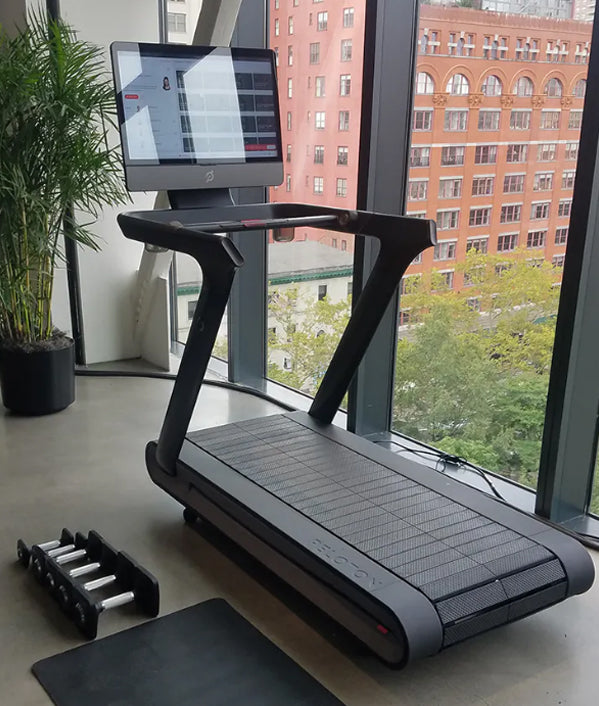
Connected training. Touchscreen consoles with platforms such as iFit put a coach on the screen who guides your run through real world routes and can control your speed and incline as the terrain changes. For many people this is the single biggest factor in whether the treadmill keeps getting used.
Wireless heart rate. Handlebar grip sensors are famously inaccurate. Chest strap or arm band connectivity gives you real data, which matters if you train to heart rate zones.
Bluetooth and app sync. Useful for syncing workouts with apps and wearables, and for music through the console speakers.
Treat everything else, holders, trays, USB ports and fans, as pleasant extras rather than deciding factors.
Warranty in the UAE: Read This Before You Buy

In the UAE market it is typical to receive one year on the belt, electronics and console, and a lifetime warranty on the frame. Better machines and better suppliers offer more. As a benchmark, a strong warranty looks like lifetime frame and motor cover, several years on parts and electronics, and labour included.
Whatever you buy, always insist on a lifetime frame warranty, and avoid third party warranty add ons.
If something fails outside warranty, repairs in Dubai are reasonable. A reputable technician typically charges around AED 250 for a call out, common parts run a few hundred dirhams, and even a motor controller repair is usually manageable. This is one advantage of buying recognised brands: parts exist here.
The Safety Feature People Ignore

Every treadmill has a clip on safety key. Wear it. If you stumble, it pulls free and stops the belt instantly. This matters even more in homes with children, and we advise storing the key off the machine entirely when the treadmill is not in use so it cannot be started by small hands.
Where This Guide Ends and We Begin
That is everything that actually matters when choosing a treadmill. Budget, space, user, motor, deck, warranty. Get those six right and you will own a machine you use for a decade.
If you want it made simple, this is what we do every day. Tell us your budget, your space and who is running, and we will recommend the right machine, deliver it, install it in your room and take away the packaging. White glove, no friction.
Browse the range: Home Treadmills | Commercial Treadmills
Or get in touch and we will do the thinking for you.
Kind regards,
Tim Garrett and The Gym Fit Out Team
